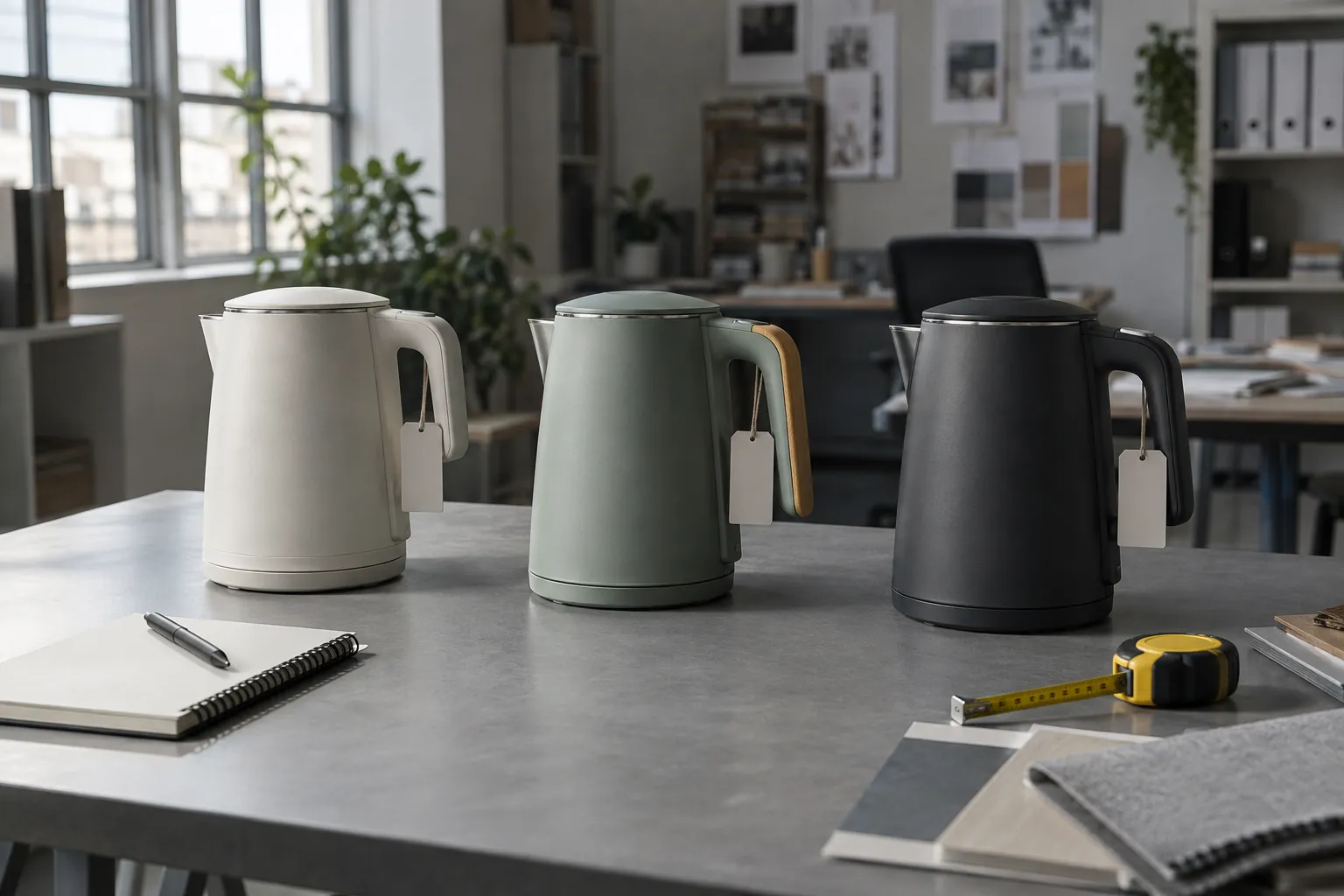
Approving an appliance sample means signing off the reference for the whole order. Before you do, test it at your market's voltage and with its plug, check the menu language, labels and manual, and record in writing what was approved, with photos and measurements.
The sample you approve becomes the standard that production is inspected against. Approve it carelessly and that carelessness is repeated a thousand times.
Electrical checks first
An appliance that works perfectly at the factory may be useless in your country. Colombia, for example, runs on 110 to 120 V at 60 Hz with type A and B plugs.
- Voltage and frequency on the rating plate.
- Plug type and cord length.
- The unit tested at the destination voltage as well as the factory's.
What to test by product
| Product | Minimum sample test |
|---|---|
| TV | Power-on, screen pattern, operating system, apps, menu language, remote control |
| Refrigerator or freezer | Time to cool down, seals, shelves, compressor noise |
| Fan | Speeds, oscillation, base stability, noise |
| Small appliance | Every function, timer, fit of removable parts |
The box, the manual and the accessories need approval too
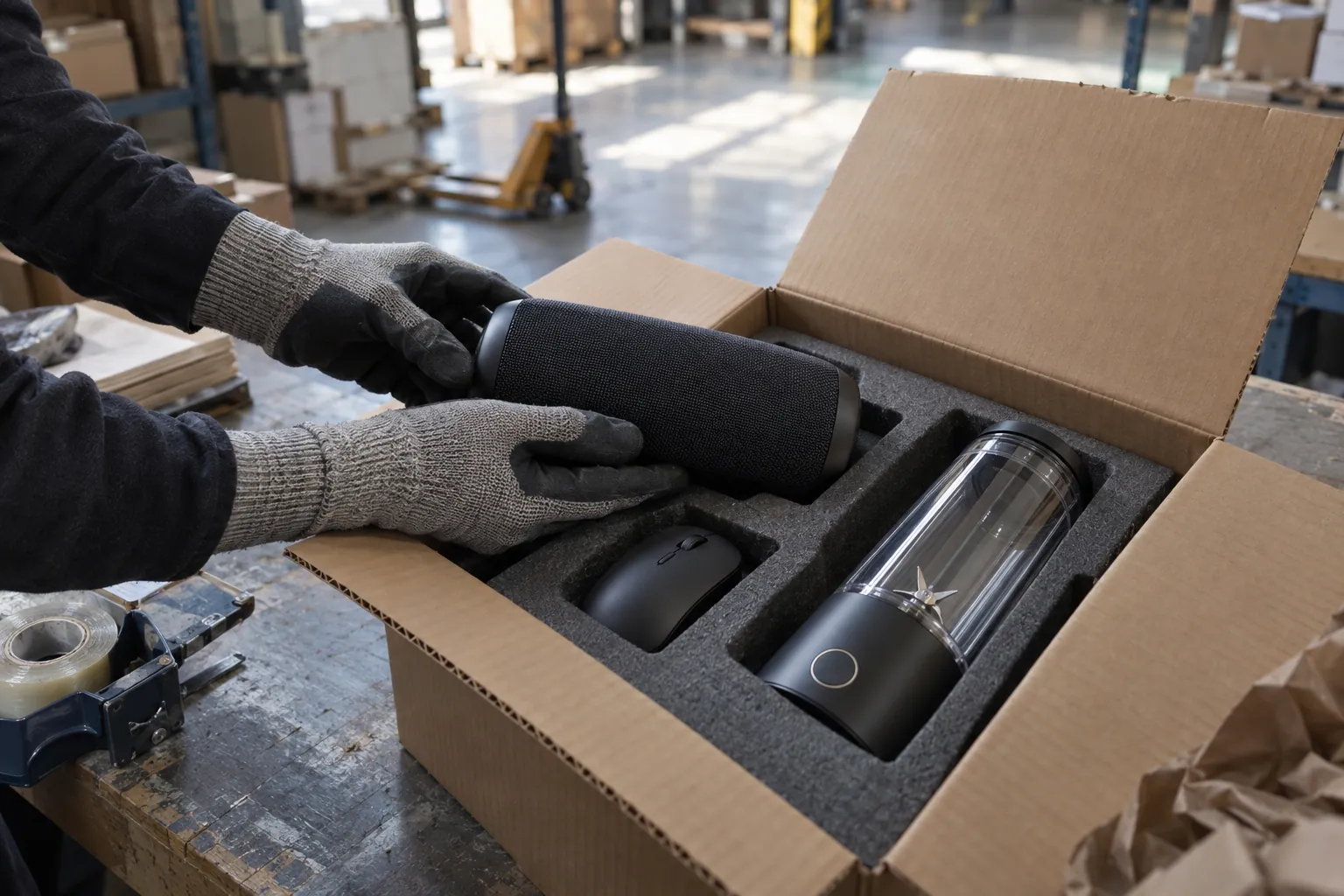
Unit box, master carton, labels and manual are part of the sample, and they are the pieces that change most between sample and production.
- Ask for the real box and manual instead of a design file.
- Check that the manual is in your market's language.
- Confirm how many units go in each master carton and what it weighs.
Put the approval in writing
A useful approval is a document with photos from every angle, measurements, color, accessory list and software version. Without it, the inspection has nothing to compare against.
Keep one unit of the approved sample, sealed. If questions come up during production, that unit settles them.
Frequently asked questions
How many sample rounds are normal?
It depends on the product and how much it changes. A catalog model with new labels can close in one round; a new design usually needs more.
What if production does not match the sample?
The inspection records it as a defect against the approved sample, and that record is what lets you demand a fix.