Latin America splits into two electrical groups: Mexico, Central America, Colombia and Ecuador run at around 120 V and 60 Hz; Peru, Chile and Argentina use 220 V, at 60 Hz in Peru and 50 Hz in Chile and Argentina. Brazil mixes 127 and 220 V by region. Before production, confirm voltage, frequency, plug and certification with the authority in the country of sale.
A Chinese factory builds for 220 V and 50 Hz by default, because that is China's grid. If you sell in Colombia or Mexico and do not specify otherwise, you may receive a container of appliances that will not work without a transformer.
The country table
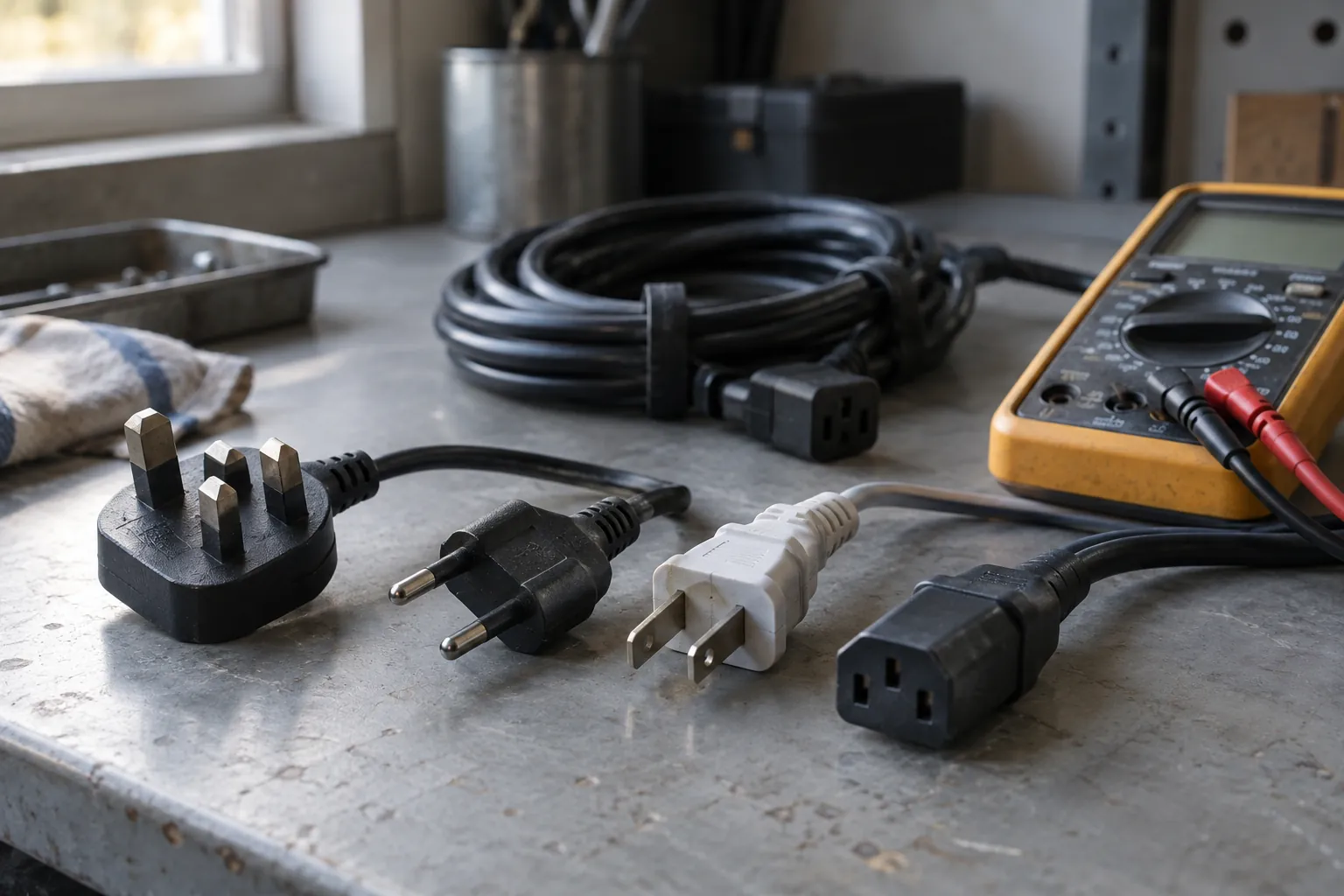
| Country | Voltage | Frequency | Plug |
|---|---|---|---|
| Mexico | 127 V | 60 Hz | A and B |
| Costa Rica and Panama | 120 V | 60 Hz | A and B |
| Dominican Republic | 120 V | 60 Hz | A and B |
| Colombia | 110 to 120 V | 60 Hz | A and B |
| Ecuador | 120 V | 60 Hz | A and B |
| Peru | 220 V | 60 Hz | A and C |
| Chile | 220 V | 50 Hz | C and L |
| Argentina | 220 V | 50 Hz | I |
| Brazil | 127 or 220 V depending on the state | 60 Hz | N |
Nominal grid values. Confirm your country's figures with the power utility or the technical authority before setting the specification.
Why 50 or 60 Hz matters for motors
The speed of an induction motor depends on grid frequency. A fan or compressor designed for 50 Hz runs about 20% faster at 60 Hz and puts more strain on the motor, with a risk of overheating.
TVs, monitors and chargers often come with universal power supplies rated 100 to 240 V and 50/60 Hz. Even so, look for the range printed on the sample's rating plate before assuming it is universal.
Certification: who to ask
Each country decides which products need electrical safety certification, an energy efficiency label or radio approval for Wi-Fi and Bluetooth. The lists change, so the rule is to confirm with the authority before production.
| Country | Where to start asking |
|---|---|
| Mexico | Mexican Official Standards (NOM) from the Ministry of Economy, through an accredited certification body |
| Colombia | Ministry of Mines and Energy and the Superintendence of Industry and Commerce; the RETIQ regulation requires an efficiency label on equipment such as refrigerators, washers and air conditioners |
| Chile | Superintendence of Electricity and Fuels (SEC) |
| Brazil | INMETRO for appliance safety and ANATEL for radio equipment |
| Other countries | The country's trade or energy authority, and your customs broker |
Also ask whether the authority accepts CB test reports as a basis. If it does and the factory already holds the CB for the model, local certification may need fewer tests.
What to write on the purchase order
- Exact voltage and frequency for the country of sale.
- Plug type and cord length.
- Certifications the model must hold before shipment, naming the authority.
- Language of the rating plate, warnings and manual.
When the specification is on the order, the inspection can verify it and any claim has something to stand on.
Frequently asked questions
Will a 220 V appliance work in Colombia with a transformer?
It may run, but you cannot sell it that way: the end customer expects to plug it straight in, and with motors the frequency also changes how it runs.
Can the factory handle certification for my country?
Some factories already hold certifications for certain markets. Otherwise the importer handles the process at destination, using the factory's test reports.