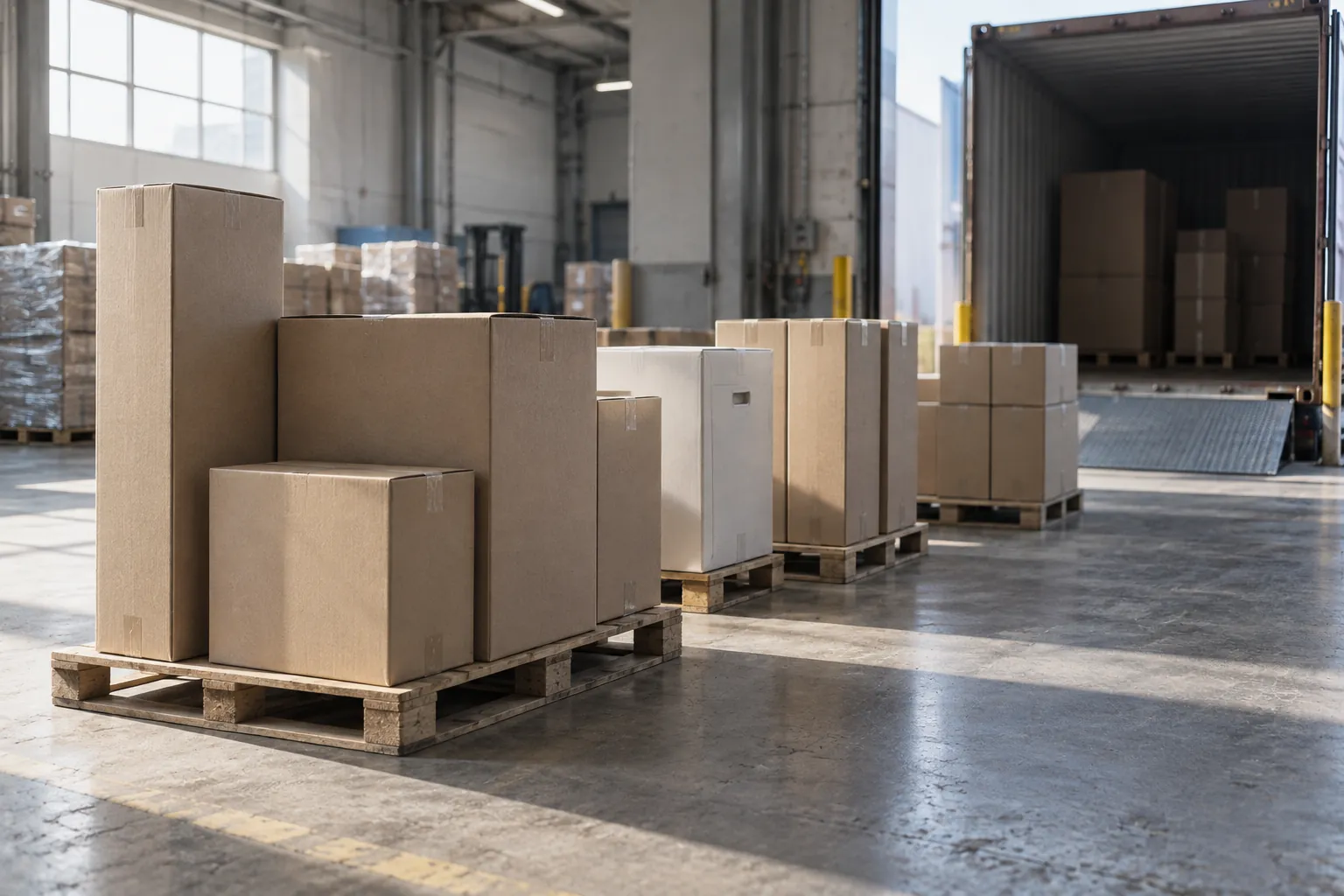
Consolidating means bringing goods from several factories into one container. It works when production dates are planned backwards from the loading day, the goods meet in a warehouse, the container is loaded to a plan with heavy goods at the bottom, and every factory's documents are checked before the doors close.
When consolidation makes sense
- When no single factory fills a container on its own.
- When you combine bulky and light products, such as refrigerators and small appliances.
- When you want one arrival, one clearance and one local delivery.
The schedule starts from the loading day
- Fix the loading date with your forwarder.
- Subtract each factory's transfer time to the warehouse.
- Subtract the days needed to inspect and fix at each factory.
- The result is each factory's production deadline.
| Factory | Product | Production ends | Inspection | Reaches warehouse |
|---|---|---|---|---|
| A | Televisions | Day 10 | Day 11 | Day 14 |
| B | Chest freezers | Day 12 | Day 13 | Day 16 |
| C | Small appliances | Day 9 | Day 10 | Day 13 |
Illustrative schedule. Every order has its own dates.
The loading plan
| Rule | Why |
|---|---|
| Heavy goods at the back and bottom | Stability and even weight |
| Refrigeration upright | As the carton markings say |
| Light goods on top and at the front | Avoids crushed cartons |
| Grouped by factory | Easier checks and clearance |
The documents that get checked
- Commercial invoice and packing list from each factory.
- Declared quantities matching the cartons loaded.
- Carton markings and each product's description.
- Whatever your customs broker needs for clearance.
Loading control
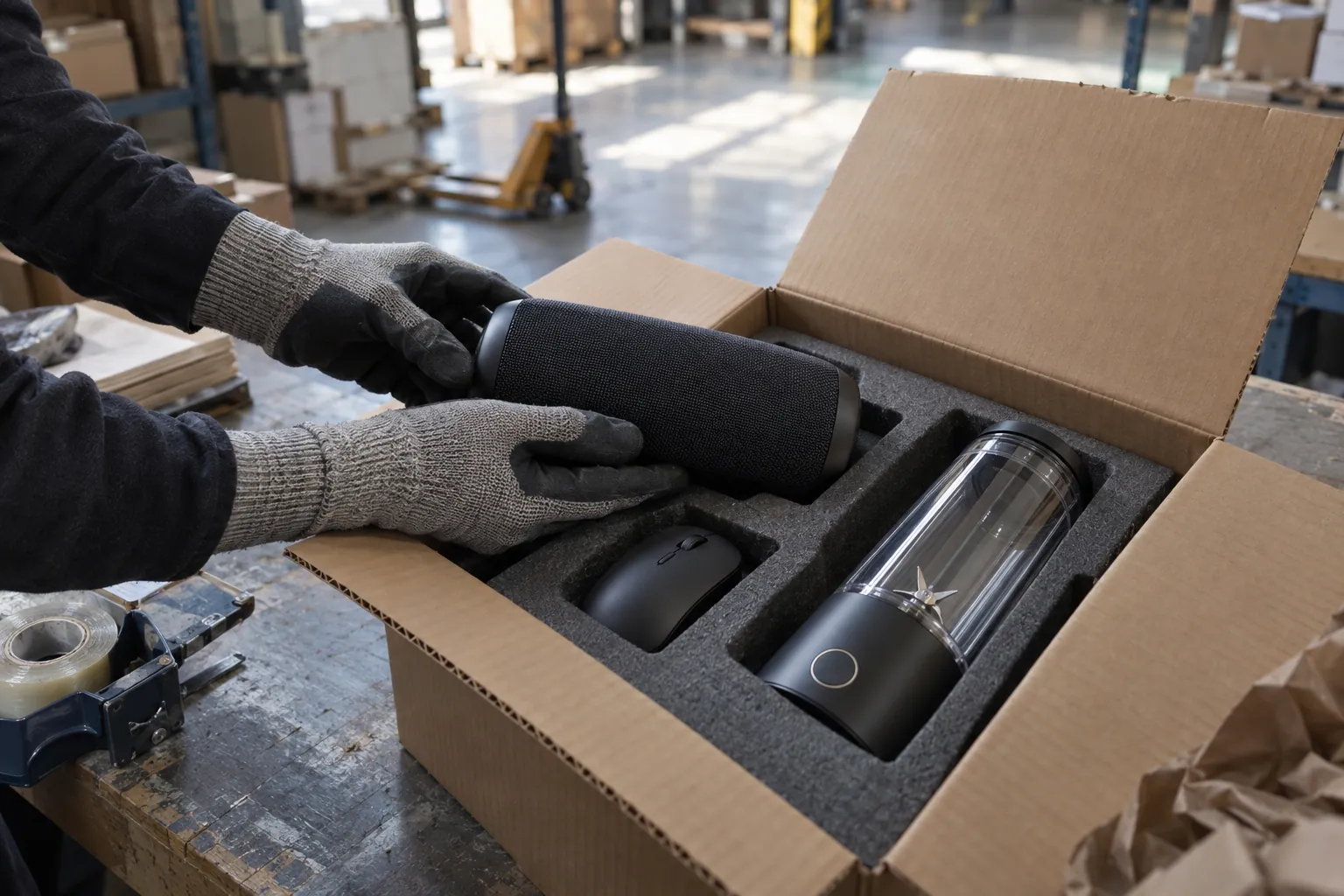
During loading the cartons are counted per product, packing condition is checked and the container is photographed open, half loaded and closed with its seal. Those photos are the last evidence before the voyage.
Common mistakes
- Planning from the factories instead of from the loading day.
- Receiving goods at the warehouse without a prior inspection.
- Laying refrigerators down to save space.
- Closing the container without photos of the seal.
Frequently asked questions
Does consolidation make the order more expensive?
It adds transfers and a warehouse, but lets you buy each factory's minimum and use the container well.
How many factories can be combined?
There is no fixed number; the limit is coordinating dates and documents.
Is there an inspection at the warehouse?
The loading is checked; production defects are best found at each factory.
What if one factory runs late?
You decide in time whether to wait or ship that product separately.